Are Women's Golf Balls Bigger? Let's Clear This Up Once and For All
Spoiler: They're not. But here's why this myth won't die—and what's actually different about golf balls marketed to women.
The short answer: For when someone asks you on the course
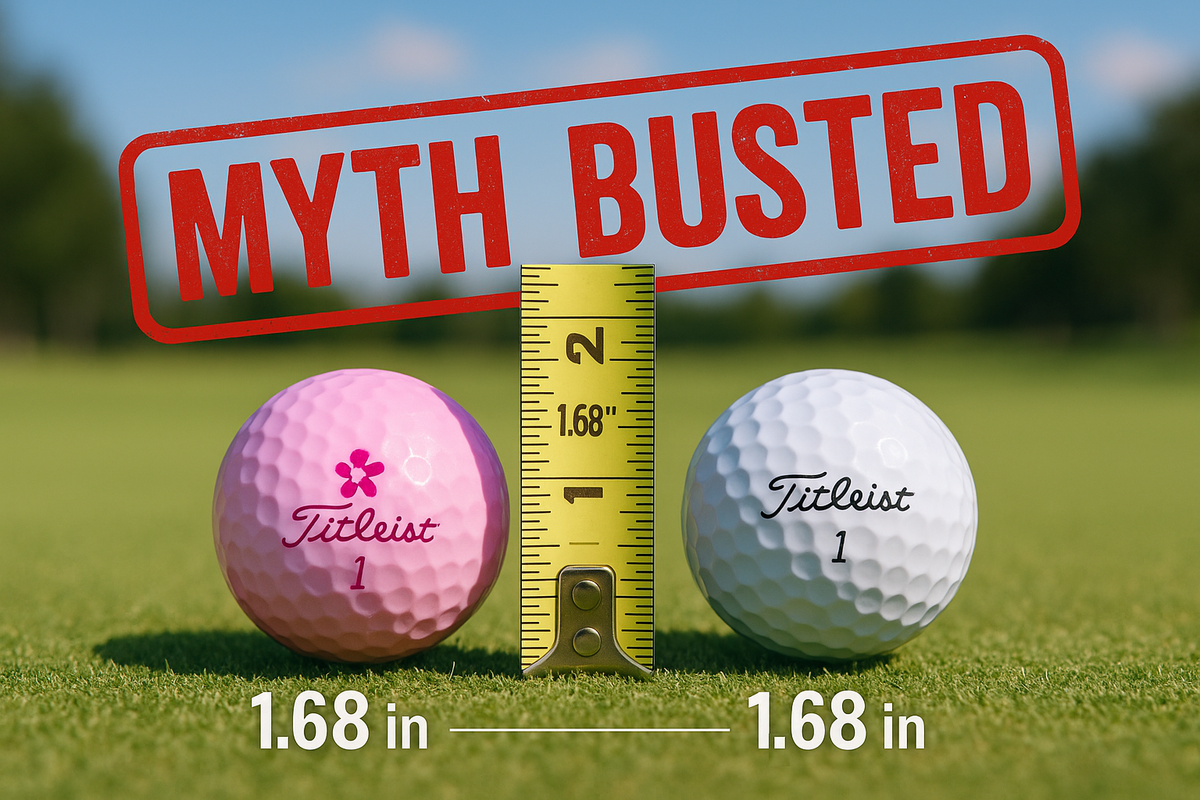
No. Women's golf balls are not bigger. They're literally the exact same size as men's golf balls - 1.68 inches in diameter, per USGA regulations.
The deets:
The real answer: Here's why this myth exists and what's actually different
Okay, so if you've heard that women's golf balls are bigger, you're not alone. This myth has been floating around golf courses and internet forums for years, and it's time we put it to rest.
The hard facts:
According to the USGA (United States Golf Association) and R&A (the governing bodies of golf), all conforming golf balls must be:
- At least 1.68 inches (42.67 mm) in diameter
- No more than 1.62 ounces (45.93 grams) in weight
There is no separate regulation for "women's golf balls" vs "men's golf balls." The rules are the same for everyone. Period.
So why does this myth exist?
Great question. Here's what's likely happening:
1. Marketing confusion - Some golf ball manufacturers market balls specifically to women, often with softer compression, different colors (hello, pink and purple options), or packaging that features female golfers. The marketing suggests these balls are "designed for women," which some people misinterpret as "different size." Nope - just different branding.
2. The compression thing - Golf balls marketed to women often have lower compression ratings (around 60-70 compression vs 90+ for "distance" balls). Lower compression balls compress more easily on impact, which helps golfers with slower swing speeds get more distance. This has NOTHING to do with size—it's about the internal construction of the ball. But if you hit a softer ball, it might feel different, leading to the assumption it's physically bigger. (It's not.)
3. Slower swing speeds = different needs - Women golfers, on average, have slower swing speeds than men. (Not a value judgment - just physics and physiology.) Golf ball companies design balls to optimize performance for different swing speeds, which is why you'll see balls marketed as "for moderate swing speeds" or "women's golf balls." But again - same size, just engineered differently on the inside.
What IS different about "women's" golf balls?
If the size is the same, what are golf ball companies actually changing? Here's the breakdown:
Compression: Lower compression (softer) balls are easier to compress with slower swing speeds, which translates to better distance and feel for many women golfers.
Core construction: Some women's balls have larger, softer cores designed to maximize energy transfer at lower swing speeds.
Cover material: Often softer urethane or ionomer covers for better feel and control around the greens.
Aesthetic options: More color choices, different packaging, sometimes alignment aids or visual features that appeal to women golfers.
Alignment and visibility features: Some women's balls have enhanced visibility features (matte finishes, bold colors) that make them easier to track.
But the actual diameter? Still 1.68 inches. Every single time.
The "Lady" ball era (aka: golf's cringey past)
Here's some historical context: In the 1980s and '90s, some companies DID try to market "ladies' golf balls" as distinctly different products. The messaging was often condescending and based on outdated assumptions about what women "needed" in a golf ball (spoiler: usually just softer and pinker). This era contributed heavily to the confusion and myths that persist today. Thankfully, modern golf ball design is much more sophisticated and less gendered -it's about swing speed and playing style, not gender.
Do you need a "women's" golf ball?
Honestly? Maybe, maybe not. It depends entirely on your swing speed and what you want out of a golf ball.
If you have a moderate swing speed (under 90 mph with a driver), a lower-compression ball marketed to women might actually work great for you. But so would any other low-compression ball designed for slower swing speeds, regardless of how it's marketed.
If you have a faster swing speed, you might actually perform better with a higher-compression ball - even if it's not marketed to women.
The point: Choose a golf ball based on YOUR swing speed, YOUR game, and YOUR preferences. Not based on what the packaging says about who it's "for."
How to actually choose a golf ball:
Forget the gendered marketing. Here's what actually matters:
1. Know your driver swing speed - Under 85 mph? Low compression (60-70). 85-95 mph? Mid compression (70-90). Over 95 mph? High compression (90+).
2. Decide what matters most - Distance off the tee? Go for a low-compression, distance-focused ball. Short game control? Look for a softer cover (urethane). All-around performance? Mid-compression multi-layer ball.
3. Test a few options - Buy a sleeve of 3-4 different balls and actually play with them. See which one feels best, performs best, and gives you confidence.
4. Don't overthink it - Honestly, if you're not a single-digit handicap, the ball probably isn't your biggest issue. (Sorry, but it's true.) Pick one that feels good, doesn't hurt your wallet, and that you won't cry about when you inevitably lose it in the woods.
The bottom line:
Women's golf balls are NOT bigger. They're the exact same size as every other conforming golf ball on the planet. What CAN be different is the internal construction, compression, and performance characteristics—but that's about swing speed optimization, not gender.
Anyone telling you women's balls are bigger either doesn't know the rules, is confused by marketing, or is just wrong. Feel free to correct them (politely, or not—we support both approaches).
Golf is hard enough without unnecessary myths making it more confusing. Now you know the truth, and you can confidently choose the right ball for YOUR game—regardless of what the package says.
What's your take—are you Team Walk or Team Cart? Hit reply and let us know. We promise not to judge the cart people. (Much.)